
Recently, the European Union (EU) revisited its climate ambitions, aiming to achieve net zero emissions by 2050. It is also on the verge of harmonising its roadmap with this ambitious objective, with the first milestone being a -55% emissions reduction by 2030. With its recent Climate Law as a starting point, Greece will soon have to also revisit its national energy and climate plan, in this new European direction.
At the same time, the EU's plan for responding to today's energy crisis and eliminating its dependency on Russian fossil fuels, since the Ukraine invasion in February 2022, explicitly mentions accelerating new renewable energy projects, diffusing energy efficiency measures, and diversifying its energy supply portfolio. However, many European leaders have so far sought solutions in currently available "grey" resources as well as in new fossil-fuel investments. In Greece, this translates to reprioritisation of lignite and bold investments into new fossil fuels, notably liquefied natural gas, opening many questions regarding the country's climate ambition in the near future.
Any effort to respond to these questions, regarding national climate action and green transition in the light of today's energy crisis, must be socially acceptable. Ideally, citizens should be given the stand to co-produce the national strategy, be informed and express their views on the alternatives, and co-own Greece's green transition.
In the context of PARIS REINFORCE, the National Technical University of Athens (NTUA) and the Hellenic Society for the Environment and Culture are co-organising a national conference on "Climate change, the Energy Crisis and Greece's Net-Zero Transition", on Tuesday, November 8, 2022, giving the opportunity to stakeholders from industry, academia, government, and the civil society to get informed, discuss, raise concerns, and help decide the way forward.
The conference will include four sessions, during which we will present findings from the PARIS REINFORCE consortium and discuss issues regarding the national plan towards dealing with the energy price shocks, the value of energy democracy in the long-term transition, the role of business in today's energy crisis, and the potential lying in renewables (and especially wind energy) in a socially just and environmentally effective pathway to net-zero.
The agenda of the event will soon be released. The registration form is available, in Greek, here.
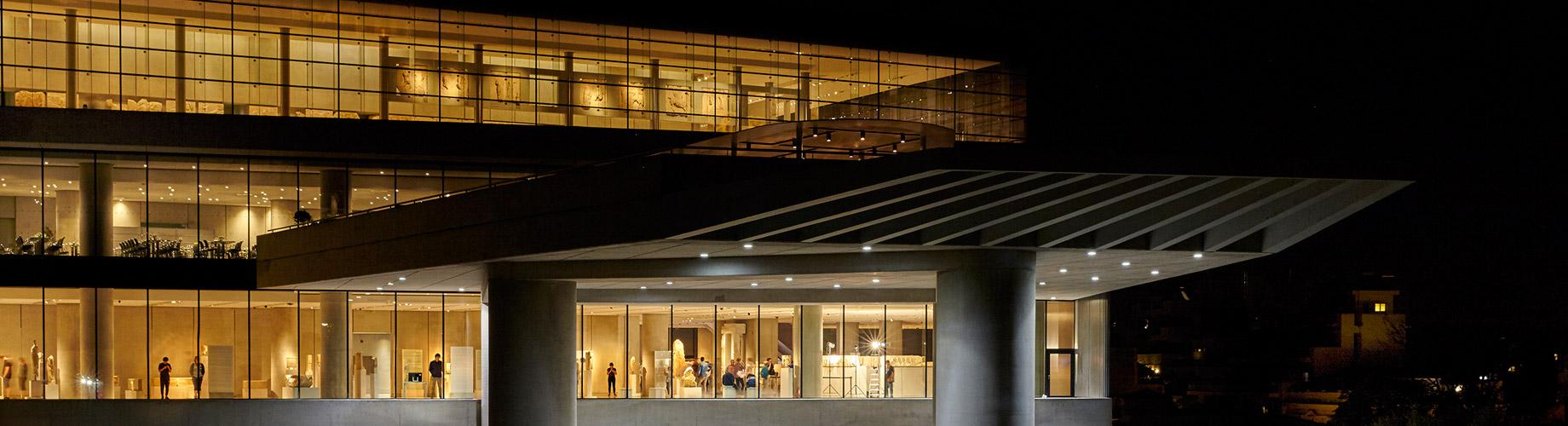
The header photo, by Giorgos Vitsaropoulos, belongs to the Acropolis Museum, straight from the museum's website (http://www.theacropolismuseum.gr/).
